
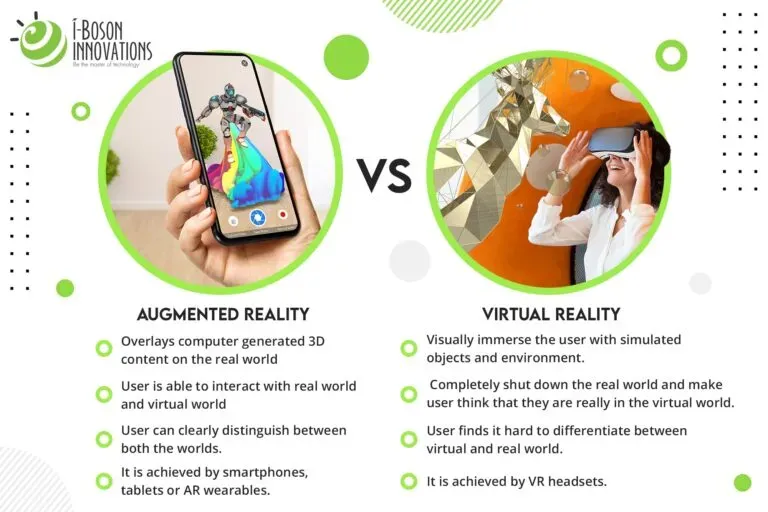
Augmented Reality and Virtual Reality are transforming how we perceive and interact with the world, turning once distant ideas into practical, everyday tools that blend digital insight with tangible surroundings, and they are increasingly woven into the routines of work, study, and play. From smartphones and tablets to purpose-built headsets and wearable glasses, AR and VR merge digital overlays with real environments to enrich how we learn, work, shop, communicate, and navigate daily life. In education, VR in education offers immersive simulations that let students explore complex systems, perform virtual experiments, rehearse procedures, and retain concepts more effectively, while teachers gain new possibilities for assessment and feedback. Beyond classrooms, these technologies streamline tasks, enhance shopping experiences, enable hands-free assistance in maintenance and repair, support remote collaboration, and empower healthcare professionals and patients with safer, more intuitive interactions. As devices grow lighter, screens brighter, and software smarter, the practical reach of AR and VR continues to expand, bringing context-aware insights, richer training, and more meaningful entertainment into everyday activities.
A broader view treats these experiences as a continuum, spanning mobile augmented reality, spatial computing, and mixed reality—an ecosystem where digital overlays respond to lighting, space, and user intent rather than forcing people to don a single device. Developers leverage context awareness, natural gestures, and inside-out tracking to make interactions feel natural, with tools that work across classrooms, clinics, factories, and living rooms. In daily practice, these technologies enable quick lookups, guided procedures, and collaborative visualization without breaking the flow of real-world tasks. By focusing on accessibility, privacy, and ergonomic design, the industry aims to deliver more inclusive, comfortable experiences that preserve user autonomy while expanding what is possible with immersive media.
Augmented Reality and Virtual Reality in Everyday Life: From AR Apps on Smartphones to VR in Education
In everyday life, Augmented Reality and Virtual Reality are no longer lab curiosities. Augmented Reality overlays digital information onto the real world, and for many users this begins with AR apps on smartphones that help visualize furniture, translate street signs, or preview products in your space. This is a practical example of augmented reality in daily life, where convenience and immediacy turn digital ideas into usable context at the moment you need them.
On the VR side, virtual reality devices are making immersive learning and training possible outside specialized labs. The latest headsets and motion controllers enable VR in education, virtual travel experiences, and skill-building simulations that feel like real-world practice without risk. As these tools become more accessible, people can explore remote collaboration, complex concepts, and hands-on exercises through fully immersive digital environments.
Designing Accessible and Responsible AR and VR Experiences for Everyone
Achieving inclusivity in AR and VR hinges on thoughtful design that minimizes latency, reduces motion discomfort, and supports diverse users. Prioritizing clear visuals, comfortable field of view, and intuitive controls helps ensure experiences align with the needs of learners, shoppers, and professionals alike. This emphasis on accessibility extends to content quality and cross‑device performance, so AR apps on smartphones and dedicated virtual reality devices deliver consistent value across settings.
Beyond usability, privacy, safety, and ethics are essential as AR and VR become more embedded in daily life. Designers should consider data handling, consent, and parental controls, especially for apps used by younger audiences. In contexts like AR and VR in healthcare, responsible design matters even more, guiding how overlays assist clinicians or assist patients in rehabilitation while protecting user well-being and autonomy.
Frequently Asked Questions
How is augmented reality in daily life changing everyday activities, and what roles do AR apps on smartphones and VR in education play in this shift?
Augmented reality overlays digital information onto the real world, enabling practical tasks without leaving your environment. In daily life, AR apps on smartphones let you preview furniture, try cosmetics, or view contextual information as you navigate, while VR in education offers immersive simulations that enhance understanding and practice. Together, AR and VR extend decision-making, improve learning outcomes, and expand how we interact with digital content, all while emphasizing accessibility and user privacy.
What should users know about virtual reality devices and AR and VR in healthcare when exploring immersive technology for training, therapy, and remote collaboration?
Virtual reality devices range from lightweight headsets to standalone systems, with features like inside-out tracking and comfortable designs that affect how long you can use them. In healthcare, AR and VR in healthcare applications support surgical planning, therapy, patient education, and professional training, all while prioritizing safety and privacy through proper data handling and consent. When evaluating immersive technology, seek reputable vendors, assess comfort and usability, and review safety guidelines to minimize motion sickness and ensure responsible adoption.
| Area | Key Points |
|---|---|
| Introduction | AR and VR are integrated into everyday technology, shaping how we interact with the world, learn, work, and play; they affect users, developers, and businesses alike. |
| Focus and Definitions | AR overlays digital information onto the real world; VR creates immersive digital environments; MR sits between them; rapid convergence driven by accessibility and hardware/software advances. |
| Adoption & Impact Areas | Used in shopping, navigation, education, healthcare, manufacturing, and remote collaboration; shifts how people search for information, learn skills, and experience entertainment. |
| AR in Everyday Tech | Smartphone AR enables overlays for furniture placement, room-scale previews, dimension checks, and real-time information; enhances shopping, learning, and social interactions; supports professionals with hands-free data. |
| VR’s Role | VR provides immersive gaming, virtual travel, fitness, and remote collaboration; enables realistic training and education; supports onboarding and teamwork in a shared digital space. |
| The Everyday Convergence & MR | AR, VR, and MR are blending; MR enables more natural interactions where virtual objects respond to real-world cues; devices are becoming capable enough to offer integrated experiences and seamless mode switching. |
| Hardware & Software Ecosystems | Smartphones remain a primary AR gateway; AR glasses/headsets reduce form factors; VR headsets with inside-out tracking and higher-res displays improve comfort; future devices will blend AR overlays with VR-like immersion. |
| Sectoral Applications | Education (concepts and virtual field trips); Healthcare (guidance overlays, rehab); Industry/Manufacturing (maintenance steps); Retail (interactive demos); Entertainment (immersive storytelling). |
| UX, Design & Accessibility | Latency, visual clarity, comfortable field of view, and intuitive controls are crucial; accessibility features and high-quality 3D content improve usability; mitigate motion sickness with design choices like snap turning and adjustable motion settings. |
| Privacy, Safety & Ethics | AR/VR raise privacy concerns (camera, location data); consent and data control are essential; safety features (play-area boundaries, parental controls) and ethical considerations around digital well-being are important. |
| Future Trends | 5G, better sensors, cheaper optics, and more capable software will accelerate adoption; more responsive AR overlays, deeper VR immersion, and MR for design and field work; emphasis on usability, comfort, and privacy. |