
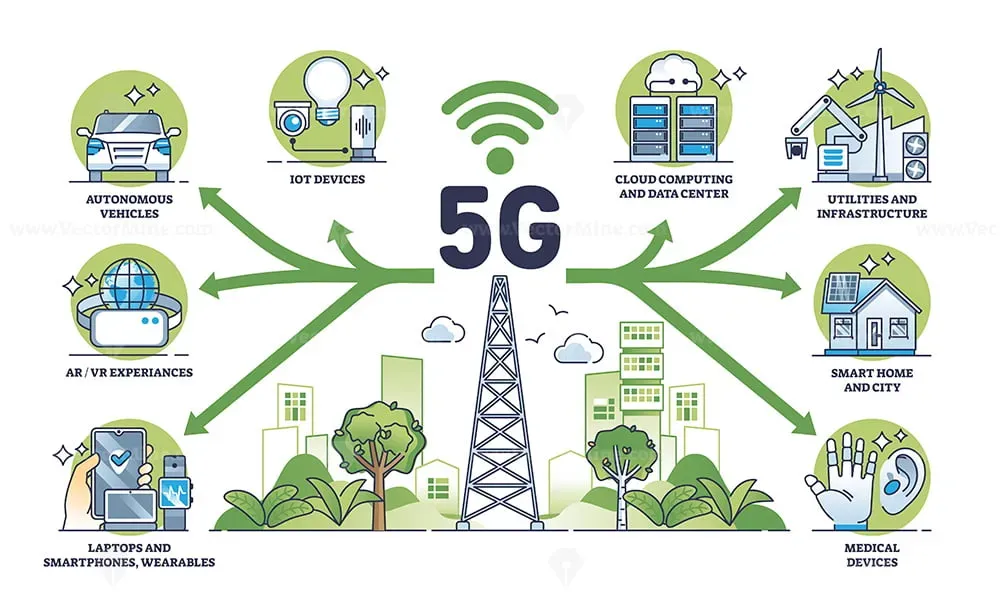
5G connectivity is redefining the way we live and work, delivering faster speeds, lower latency, and a more capable communications fabric. As organizations adopt edge computing, IoT, and smart cities initiatives, 5G connectivity becomes the backbone that enables real-time insights and responsive services. This foundational shift is expanding the reach of telecommunications infrastructure to support a broader, more resilient technology ecosystem. From factories to remote clinics and urban grids, the synergy between 5G connectivity and cloud-native networks is shaping the future of mobile and fixed deployments. By aligning networks with intelligent edge platforms, businesses can unlock new efficiency, security, and user experiences across sectors.
Viewed through the lens of next-generation wireless engineering, the topic centers on a flexible, programmable connectivity fabric rather than mere speed. Fifth-generation networks, sometimes described as ultra-fast, low-latency architectures, enable edge-aware computing and expansive IoT ecosystems. These architectures rely on cloud-native cores, network slicing, and intelligent radio access to deliver reliable performance across industrial and consumer settings. As cities and industries plan for resilient digital services, the shift toward a more open, interoperable telecommunications ecosystem becomes essential. In this evolving picture, the same technologies that power edge computing and smart devices connect people, places, and processes more efficiently.
5G Connectivity as the Foundation for Edge-Enabled Smart Cities and IoT
5G connectivity provides the flexible, scalable fabric that ties together edge computing and IoT in urban environments. By combining sub-6 GHz coverage with high-capacity millimeter-wave bands and a fiber-based backhaul, networks can densify through small cells while preserving reach. Network slicing, cloud-native cores, and service-based interfaces let operators tailor performance for verticals like public safety, traffic management, and industrial automation, all within a robust telecommunications infrastructure.
With edge computing close to data sources, latency-sensitive apps—from autonomous vehicles to predictive maintenance in manufacturing—get faster, more reliable responses. This reduces backhaul traffic, enables real-time analytics, and supports immersive experiences in consumer devices. As smart cities scale, 5G-enabled edge processing supports energy management, intelligent lighting, real-time surveillance, and resilient digital services, anchored by a secure and evolving telecommunications infrastructure.
Edge Computing, IoT, and Telecommunications Infrastructure: A Synergistic Path to Resilient Digital Ecosystems
Edge computing acts as the computational layer at the edge of the telecommunications infrastructure, moving processing closer to IoT devices and sensors. This proximity lowers latency, reduces core network congestion, and enables real-time decision making for industrial automation, healthcare monitoring, and smart agriculture, all while maintaining security through distributed data handling and privacy-preserving architectures. The blend of cloud-native cores, service-based interfaces, and network slicing underpins a scalable, flexible platform for diverse workloads.
Realizing this synergistic ecosystem requires coordinated investment in fiber backhaul, open RAN, SDN, and interoperable platforms, plus thoughtful policy and governance. Standards bodies, universities, and industry players must collaborate on spectrum allocation, vendor diversity, cyber risk management, and data governance to ensure that edge IoT deployments are resilient, equitable, and safe. When these elements align, telecommunications infrastructure becomes an enabler of smart cities, pervasive IoT, and data-driven public services.
Frequently Asked Questions
How does 5G connectivity enable edge computing and support IoT deployments?
5G connectivity brings ultra-low latency, higher bandwidth, and flexible network slicing, enabling edge computing to process data near its source and reduce round-trip times for IoT devices. This capability supports real-time analytics, autonomous decisions, and secure data handling across manufacturing, healthcare, and smart buildings, strengthening the telecommunications infrastructure that underpins modern IoT deployments.
What is the role of 5G connectivity in smart cities and modern telecommunications infrastructure?
5G connectivity enables smart cities by delivering dense, high-capacity wireless coverage and reliable backhaul for real-time sensors, cameras, and control systems. When combined with edge computing and IoT, it supports smart energy, traffic optimization, and public safety applications with lower latency and improved data integrity. Achieving this requires a robust telecommunications infrastructure—fiber backhaul, dense small cells, beamforming, and a cloud-native core that scales with demand.
| Topic | Key Points |
|---|---|
| 5G capabilities and purpose | 5G connectivity is more than faster speeds; it is a flexible, scalable, intelligent communications fabric that supports diverse workloads (eMBB, URLLC, and mMTC), enabling a connected economy, smarter cities, and resilient digital services. |
| Technical foundations | The promise rests on improvements in radio access, core networks, and service delivery. 5G uses new radio technology for three main use cases (eMBB, URLLC, mMTC); spectrum strategy combines sub-6 GHz and millimeter-wave bands; a cloud-native core with service-based interfaces and network slicing enables multiple virtual networks on shared infrastructure. |
| Edge computing and IoT synergy | Edge computing brings processing closer to data sources, enabling real-time analytics, autonomous decisions, and latency-sensitive services. This reduces round-trip times and bandwidth needs. IoT expands with sensors, wearables, and smart devices, supported by 5G connectivity for scalable, secure, and energy-efficient operation. |
| Smart cities and infrastructure | 5G connectivity enables dense sensor networks and control systems for energy, traffic, safety, and environment monitoring. When combined with edge computing and cloud analytics, cities can deploy at scale, reduce delays, and improve citizen outcomes while maintaining resilience. |
| Telecommunications infrastructure | A robust mix of fiber backhaul, dense small-cell deployments, and scalable core networks is needed. Fiber-backed backhaul supports high capacity and low latency; small cells and beamforming extend urban coverage; cloud-native cores enable rapid service deployment. Network densification, Open RAN, and SDN improve interoperability and cost efficiency. |
| Practical implications for businesses, industries, and policy makers | Businesses can create new revenue streams, enhance customer experiences, and deploy analytics and automation with lower latency. For industry: smarter factories, remote monitoring, and real-time logistics. Policymakers must address spectrum allocation, privacy, cyber security, and collaboration across universities, standards bodies, vendors, and providers to ensure safe, accessible 5G connectivity. |
| Challenges and opportunities | Security remains a priority due to a larger attack surface and complex network slicing. Privacy considerations grow with data flows. The digital divide risks unequal access, while energy use and environmental impact require sustainable deployment. These challenges coexist with opportunities for innovation, efficiency, and resilience. |
| Looking ahead beyond 5G | The evolution points toward a broader technology infrastructure vision, including 6G research, AI-driven network management, and open architectures. Future edge capabilities, pervasive IoT, and city-scale digital twins will help planners optimize systems and services in a more connected, intelligent world. |
Summary
Conclusion